
PFAS Found in Nearly Half of Sports Tapes and Kinesiology Tapes
Our laboratory testing shows that several types of sports tape and kinesiology tape contain illegal PFAS substances that are harmful to both human health and the environment.

Sports tape and kinesiology tape can help support joints and muscles during injuries, soreness, or physical activity. But what you may not know is that the tape applied directly to the skin can contain PFAS, also known as “forever chemicals,” which accumulate in both the environment and the human body.
Back in 2024, The Danish Consumer Council THINK Chemicals tested seven sports tapes sold on the European market and found PFAS in all of them. We have now tested sports tapes and kinesiology tapes again, this time primarily from the Danish market, and found PFAS in just under half of the products.
Key Findings from the Test of Sports Tapes and Kinesiology Tapes
- Eight out of 19 sports tapes and kinesiology tapes contain PFAS, accounting for just over 40% of the products tested.
- All eight tapes containing PFAS were found to contain banned PFAS substances, with levels far exceeding the legal limits.
- Most of the products were purchased from Danish stores and online retailers, while three were bought from online marketplaces outside the EU.
Banned PFAS Substances Found in Sports Tapes
Eight out of the 19 sports tapes and kinesiology tapes included in our test contain PFAS.
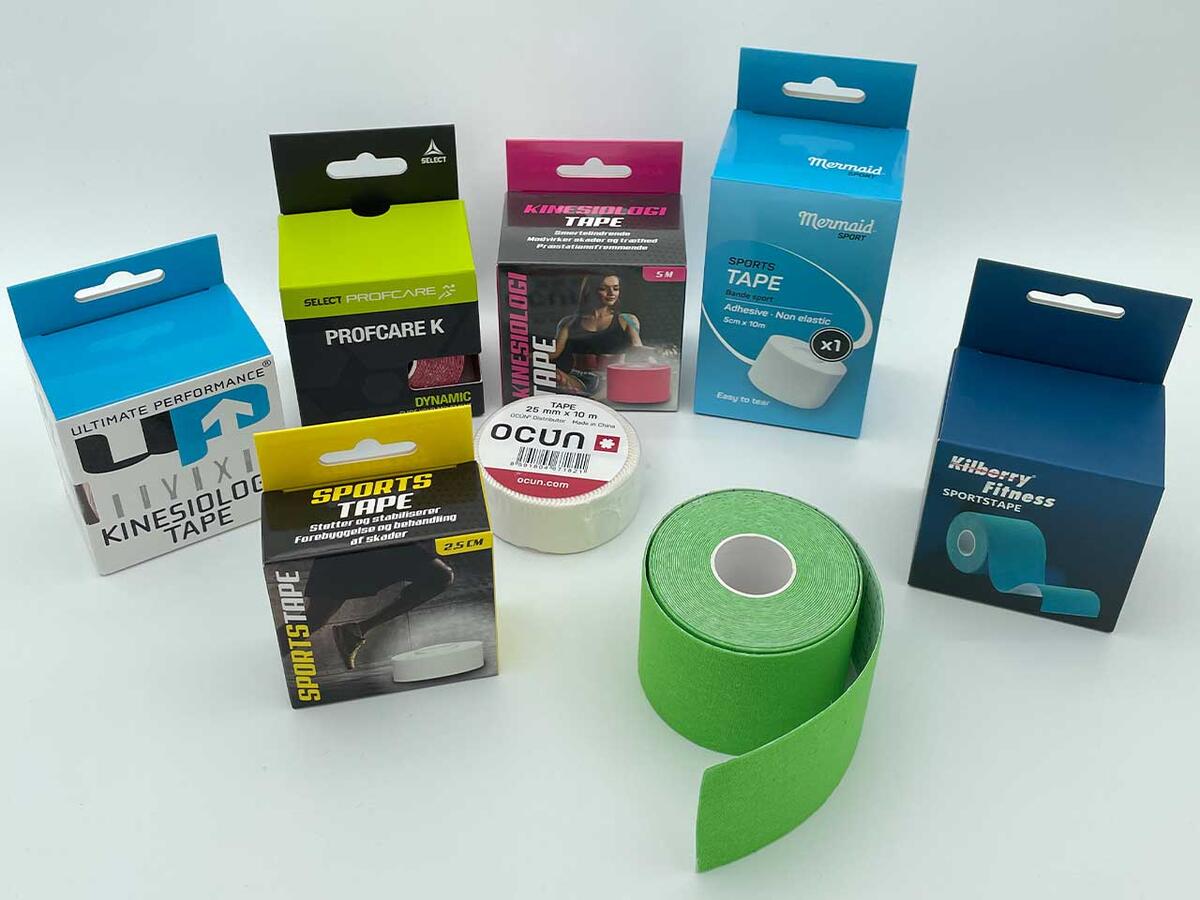


All eight products contain illegal PFAS substances at concentrations far above the permitted limits.
High concentrations of the PFAS substances 8:2 FTOH, 10:2 FTOH, and 12:2 FTOH were found in all products, while 6:2 FTOH was detected in several of them.
The substance found at the highest concentrations was 8:2 FTOH, which is related to the PFAS substance PFOA. In several products, the concentration was hundreds of times higher than the legal limit. The limit values for 10:2 FTOH and 12:2 FTOH were also exceeded in all eight products, while the concentrations of 6:2 FTOH were generally lower.
As a result, we have reported all eight tape products to the Danish Environmental Protection Agency’s Chemicals Inspection Service.
In response to the test, some companies stated that they have stopped selling the product. Others said that the tested products came from an earlier production batch and that newer versions have been manufactured without PFAS. You can find the individual company responses further down in the article.
PFAS found in both types of tape
There is a difference between sports tape and kinesiology tape. Sports tape is rigid and non-elastic and is used to restrict movement, for example to support an injury.
Kinesiology tape is thinner and elastic, allowing it to support and relieve muscles without restricting movement to the same extent.
When it comes to PFAS content, however, there is no difference. In our test, we found PFAS in four out of nine kinesiology tapes and in four out of ten sports tapes.
Sports tapes and kinesiology tapes without PFAS
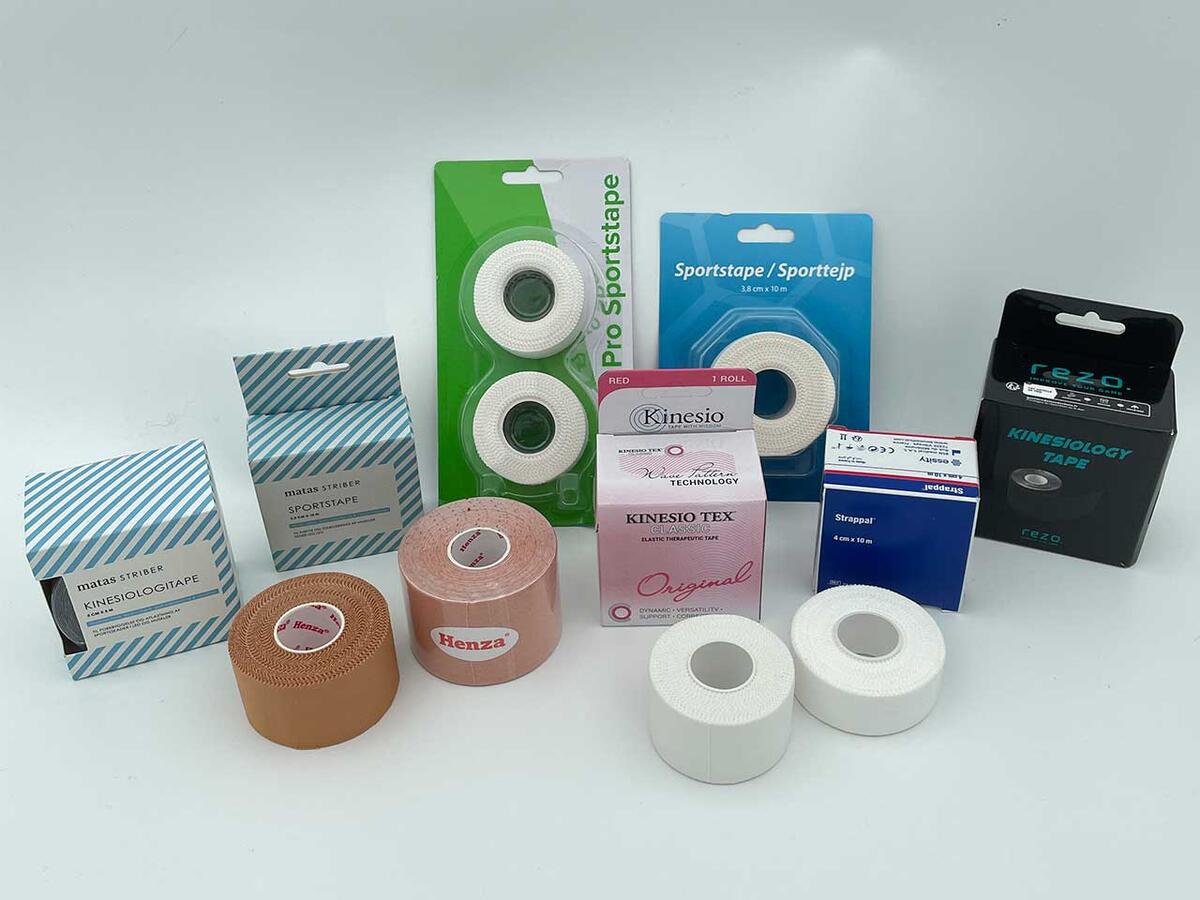
Eleven sports tapes and kinesiology tapes in the test were free of PFAS. We did not assess how well they support or relieve muscles and joints, or how effectively they adhere to the skin.

Rules for PFAS in medical devices
Sports tape and kinesiology tape are classified as medical devices. Like all other products, they are subject to both the EU’s REACH chemicals regulation and the EU POPs Regulation, which stands for Persistent Organic Pollutants.
These regulations set low limit values for several PFAS substances, including PFOA and PFOA-related substances. Restrictions and limits on substances such as PFOA and PFOA-related compounds have been in force since 2020. All of the sports tapes and kinesiology tapes included in this test were purchased in the spring of 2026.
However, sports tape and kinesiology tape are not covered by Denmark’s general PFAS ban, which applies to shoes, clothing, and waterproofing products. This means that the tapes may legally contain PFAS substances other than those specifically prohibited under EU legislation.
We contacted the companies behind the tape products that contained PFAS. Their responses can be found below.
What the companies say
-
"Harald Nyborg A/S is responsible for products marketed under our own Kilberry brand. We take the test results very seriously and have launched an internal investigation, including discussions with our supplier, collection of technical documentation, and our own verification analysis. In addition, we have immediately stopped sales of the product and other related products that could be part of the risk profile."
-
"We have a declaration from our current supplier confirming that the material does not contain substances regulated under REACH. We also have laboratory test reports confirming that these substances are not present. However, to obtain independent verification, we have sent the material for testing at another laboratory using the same test method. We are now awaiting the results before taking any further steps."
-
"We have reviewed the test results provided. In this connection, it is important to note that the batch in question was produced and shipped before the test standard EN 17681-1:2025 came into force.
RFX+CARE places great emphasis on product safety and compliance and continuously works to ensure that our products and materials comply with applicable legislation and relevant requirements.
For the sports tape in question, we changed the material to a fluorine-free alternative in September 2025 after the old stock had been depleted. Based on the test results provided, we have now, as an additional precautionary measure, submitted the current fluorine-free version for PFAS testing.
We have also changed the materials used in our other relevant products, including products containing waterproof textiles, to fluorine-free alternatives.
PFAS testing and ongoing follow-up have been integrated into our quality management system as part of our continuing quality assurance and compliance efforts."
-
"The product Profcare K tested by The Danish Consumer Council THINK Chemicals originated from a 2025 production batch, which is relevant in this case. Select Sport changed the textile composition to a non-PFAS material during the transition from 2025 to 2026.
The PFAS originated as a residual by-product of a water-repellent treatment applied to the tape to optimize its performance in wet conditions."
-
Shein states that it has removed the tested sports tape from sale on its platform.
-
"Together with the rest of the medical industry, we have spent several years working to eliminate PFAS from our products.
Like all other brands, our factories must use medical-grade adhesives supplied by primary component manufacturers. Until recently, virtually all of these adhesives, and certainly the highest-performing ones, likely contained PFAS components.
However, the primary adhesive manufacturers have worked hard to remove PFAS while maintaining performance.
As a result, all Ultimate Performance Kinesiology Tape produced since late 2025 contains the latest Henkel adhesive, which is PFAS-free.
All products in our warehouse, as well as all products held by our Danish distributor Ditlev Sports (including other types of sports tape), are now from batch 202511 or later, which is PFAS-free."
Is PFAS in sports tape dangerous?
Sports tape and kinesiology tape are applied directly to the skin. We believe that PFAS may be present in the adhesive layer of the tape, as these substances are often used to make materials resistant to sweat and water. This is also the part of the tape that comes into direct contact with the skin. However, we cannot say this with certainty, as our test measures the total amount of PFAS present in the entire tape.
In the tape products where we found PFAS, the levels exceeded the amounts legally permitted in products. Therefore, we do not recommend purchasing the sports tapes and kinesiology tapes in this test that contain PFAS.
If you already own one of the tapes in which we found PFAS, there is no need to panic. Exposure from the tape itself is not considered dangerous. However, because the products contain illegal levels of PFAS, we encourage you to contact the company and request a replacement.
Several manufacturers have stated that their newer products are produced without PFAS. You can find the companies’ responses under the individual products in the test.
If your tape was not included in the test, you can contact the manufacturer and ask whether the product contains PFAS. Unfortunately, this information is not indicated on the packaging, and laboratory testing is required to determine whether a product contains PFAS.
The biggest problem with PFAS
Products such as sports tape make up only a small part of our overall exposure to PFAS, but they represent yet another source of these substances in everyday life.
The biggest challenge associated with PFAS in consumer products is the manufacturing process itself. During production, PFAS can be released into the environment, where the substances spread and may ultimately affect both people and nature.
At The Danish Consumer Council THINK Chemicals, we have long worked to remove these unwanted chemicals from consumer products, both in Denmark and across the EU, to help protect both people and the environment.