
This pacifier should be avoided
One pacifier in our test poses a choking hazard to your child. Some pacifiers also release small amounts of BPA, a Suspected endocrine disruptor. That is the result of a test of 13 pacifiers.

There is a huge range of pacifiers available in different shapes, sizes, silicone, natural rubber, and more. Many pacifiers are good, safe, and free from unwanted chemicals, but one product may pose a choking hazard to your child, and six pacifiers show traces of bisphenol A, which is a Suspected endocrine disruptor and may harm fertility.
This is shown in our test of 12 pacifiers purchased on the Danish market and one pacifier purchased from Shein.
Main conclusions from the test
• 7 out of 13 pacifiers receive a good rating.
• Five pacifiers release small amounts of BPA and receive an average rating.
• One pacifier releases BPA and poses a choking hazard. It receives the lowest rating.
Shein pacifier poses choking hazard
A pacifier purchased from Shein releases BPA, a Suspected endocrine disruptor, and also comes with a pacifier clip whose head is small enough to present a choking hazard for infants. We therefore advise against using this pacifier with the clip and generally recommend avoiding pacifiers from online marketplaces.
Shein pacifier poses choking hazard

The pacifier was purchased on shein.com and comes with a pacifier clip that poses a choking hazard. The length of the clip is not dangerous, but the head of the clip is so small that a child could choke on it.
The pacifier also failed the mechanical safety test for pull and bite strength.
The laboratory also detected the release of small amounts of BPA, a Suspected endocrine disruptor, from the pacifier.

Contamination during production can end up in pacifiers
Five out of 12 pacifiers from the Danish market release small amounts of BPA. All five receive a low chemical rating.
Three of the pacifiers are labeled “BPA-free,” but this is not necessarily a guarantee.
The pacifier material itself may be produced without BPA, but small amounts of the substance can still end up in the finished product because it may appear elsewhere—for example, from other materials used during production, packaging, or labels that come into contact with the pacifier.
Bisphenol A is a particularly problematic chemical
Bisphenol A (BPA) is on the EU candidate list of especially problematic chemicals. It is a Suspected endocrine disruptor, harms fertility, and may affect the immune system.
Suspected endocrine disruptors may contribute to reduced sperm quality and earlier puberty in girls, among other effects.
The substance is banned in baby bottles and food packaging for children under age 3, but pacifiers are not yet covered by this ban.
Several companies state that they do not use bisphenol A and that their own pacifier tests show no release of bisphenol A.
“It is likely that the small amounts of BPA we measure in pacifiers come from contamination. We encourage companies not only to test the pacifier itself, but also to thoroughly examine all materials the pacifier comes into contact with after production,” says Stine Müller, test manager at The Danish Consumer Council THINK Chemicals.
We have also seen in previous tests of products such as water bottles and teething rings that BPA-free labeling is not a guarantee against BPA findings.
Here are the companies’ comments
-
“Through 16 years of extensive testing, no BPA has been detected in our pacifiers. The current very low measurement differs from our documentation, and we are therefore investigating the matter further. We cannot rule out that external contamination may have affected the tested sample. At the same time, the test shows that the product is among the strongest on the market, which is linked to our use of natural rubber—a safe and durable natural material.”
-
“We know that parents must be able to have full confidence in the products they choose for their children. That is why we take The Danish Consumer Council THINK’s result seriously, even though it concerns a very low level that is far below the limit values in the current standard.
We test all our products according to current standards and legislation, and we actively use testing in our material selection. Our pacifiers are produced in Denmark and made from carefully selected materials with a simple composition. BPA is not included in the materials we use for our pacifiers, and the product complies with current legal requirements.
At the same time, we welcome increased focus on this area and recognize that new knowledge and new testing methods can help raise standards even further. We have therefore launched a thorough review of the entire value chain—from materials and production to packaging, print, and labels—to identify and eliminate any possible source of unintended traces.
For us, it is crucial to continuously work toward the safest products for the youngest children. We believe we have a very good product on the market, and we will continue investing the necessary resources in developing pacifiers of the highest quality.”
-
The test results were shared with Shein, which states that the pacifier in question has now been removed from the marketplace.
An individual pacifier is not dangerous
You should not be alarmed if your child uses a pacifier where traces of BPA have been found. These are small amounts, and an individual pacifier does not in itself pose a health risk.
“Our concern is the total amount of bisphenols and other Suspected endocrine disruptors we are exposed to. It is important that children’s total exposure to these substances is minimized,” says test manager Stine Müller.
In 2023, the European Food Safety Authority (EFSA) lowered the acceptable daily intake threshold for BPA so dramatically that even smaller exposures may now potentially be problematic. And BPA does not come only from pacifiers: we are exposed to the substance from many different sources, such as food, packaging, and clothing.
Our measurements show how much BPA is released from the pacifier—not how much ends up in the child’s body—so the figures cannot be directly compared with EFSA’s threshold. But our calculations, along with other scientific studies, suggest that even small releases may significantly contribute to exposure when EFSA’s low limits are taken into account.
Safety is good among pacifiers on the Danish market
All 12 pacifiers from the Danish market passed the mechanical safety test for strength and durability. However, there were differences in material strength, which are reflected in the ratings.
More good pacifiers
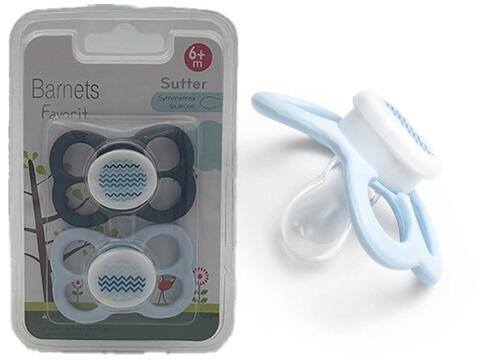
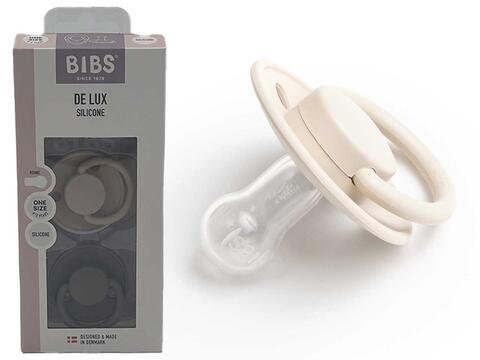
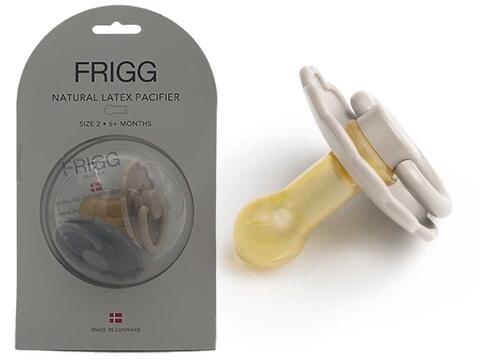
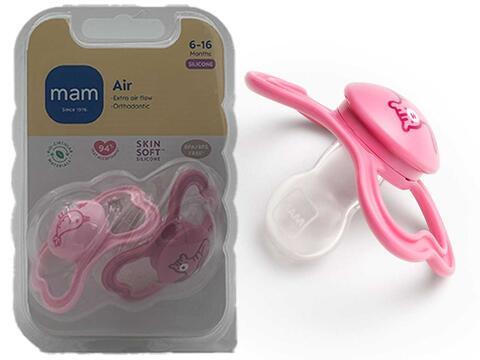
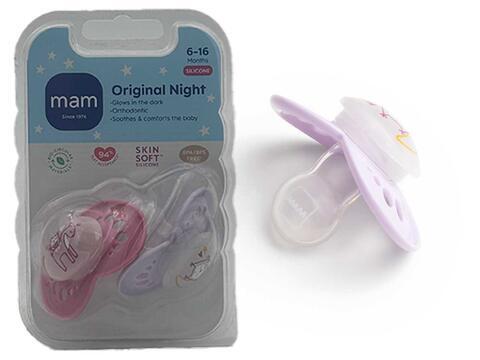
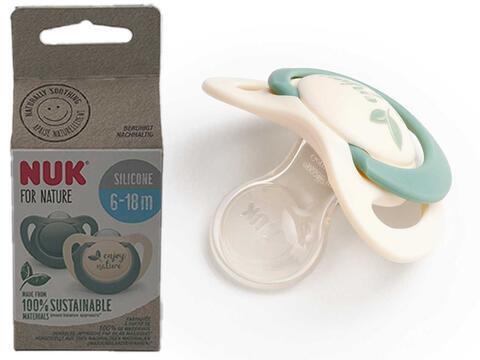
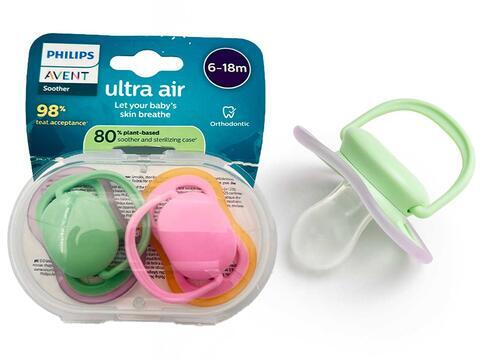
Seven pacifiers in the test are safe and free from unwanted chemicals. They receive a good rating in the test.








Bisphenols must be removed from consumer products
BPA and other bisphenols are so widespread in manufacturing that it can be difficult to keep them completely out of products.
Even when manufacturers try to avoid these substances, our tests show that they can still find their way into finished products, likely as contamination during the process. We have found traces of bisphenols in everything from teething rings and leather shoes to canned tuna and underwear—and now in pacifiers.
A broad ban is needed if we are to eliminate Suspected endocrine disrupting bisphenols.
Stine Müller, test manager, The Danish Consumer Council THINK
How we tested pacifiers
-
The pacifiers were tested in a laboratory to determine whether they are sufficiently safe, strong, and durable.
The nipple part must not detach from the shield during use or break when a child chews on the pacifier, as this could pose a choking hazard to the child.
The pacifiers were also tested to ensure they are a safe size, so they do not become lodged in the mouth or block the child’s airways.
-
We tested pacifiers to determine whether they release bisphenols when a child uses them. Bisphenols are a group of substances that are Suspected endocrine disruptors and may harm fertility.
We tested pacifiers for bisphenol release from a combined sample of nipple and shield using an artificial saliva solution at 37 degrees Celsius for 30 minutes.
The laboratory tested for a range of bisphenols, including the best-known bisphenol A (BPA), which is on the EU list of especially problematic chemicals and is banned in food packaging and toys.
The pacifiers were also tested for cyclic siloxanes, which may be present in silicone products. These substances are environmentally harmful and suspected to be Suspected endocrine disruptors.
-
Overall rating:
- Safety and durability: 45 percent
- Unwanted chemicals: 45 percent
- Labeling: 10 percent
The test was conducted in cooperation with our Swedish and Austrian sister organizations in ICRT – International Consumer Research and Testing – and includes a total of 23 pacifiers.