
Nearly One in Three Face Masks Contains Problematic Chemicals
PFAS and suspected endocrine disruptors found in deep cleansing and moisturizing face masks. See which sheet masks and clay masks you should avoid and which are without unwanted chemicals.

Moisturizing and Deep-Cleansing Face Masks are flying off the shelves, but what’s really in these popular masks?
We purchased 55 face masks from regular stores, supermarkets, and online shops and found that nearly one in three contains problematic chemicals.
Our test included sheet masks, clay masks, peeling masks, peel-off masks, hydrating masks, scrub masks, overnight masks, and charcoal masks.
Key Findings from the Test
- Nearly one in three face masks contains problematic chemicals.
- We detected harmful PFAS substances in one face mask.
- Five out of six face masks marketed to children contain problematic chemicals.
- Sheet masks generally contain more unwanted chemicals than other types of face masks.
- The best chemical choices are mainly found among Danish brands and K-beauty products in the test.
PFAS Found in Deep-Cleansing Face Mask
A popular bubble mask for blackheads, G9 Self Aesthetic Pore Clean Bubble Mask, contains two PFAS substances: Methyl perfluorobutyl ether and Methyl perfluoroisobutyl ether.
PFAS is a group of highly persistent chemicals that accumulate in nature and the human body. PFAS can increase the risk of high cholesterol, liver damage, weakened immune function, and certain types of cancer. We therefore do not recommend this mask.

Face Masks with Suspected endocrine disruptors
In our test, 10 out of 55 face masks contain chemicals suspected of endocrine disruptors. These substances can interfere with hormone balance, potentially leading to consequences such as early puberty in girls and reduced sperm quality.
One example is salicylic acid, a popular ingredient in skincare for acne-prone skin due to its cleansing and exfoliating properties. If you don’t struggle with breakouts, you can avoid products containing salicylic acid.
A single face mask with problematic chemicals is not dangerous to use on its own. However, repeated exposure from personal care products, clothing, and food contributes to your overall chemical load. To reduce your exposure, choose products without unwanted chemicals, those rated with the a-rating in our test.

Face Masks That Look Like Toys
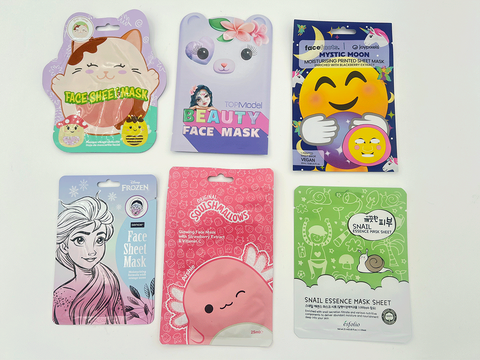
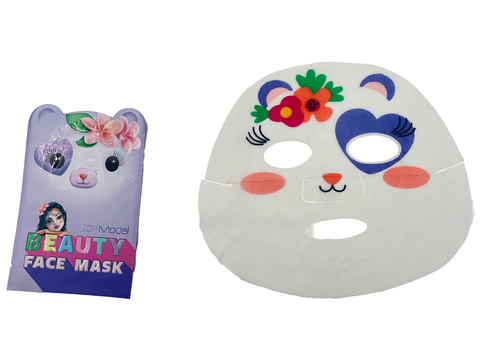
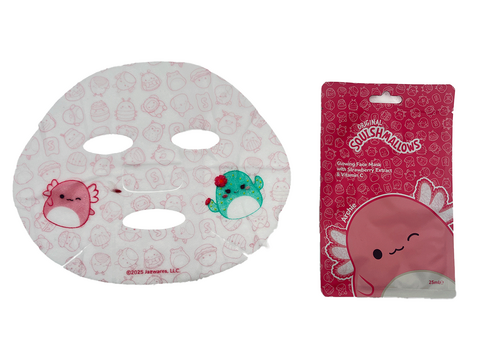
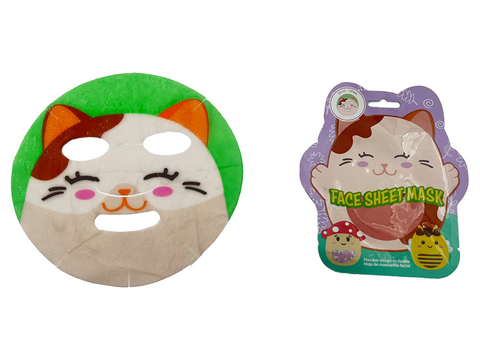
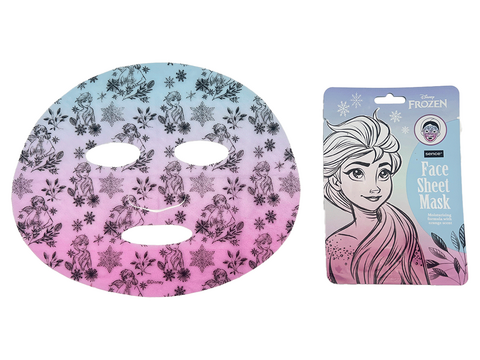
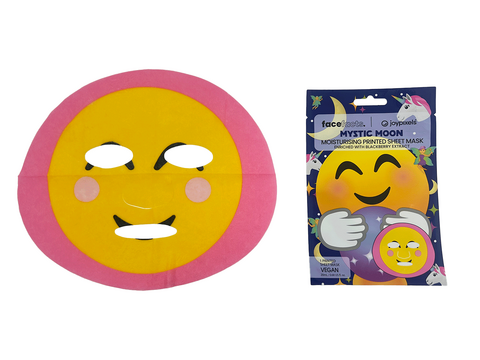
Six of the face masks in our test are marketed to children and look more like costumes than skincare products.
Although some masks include an age limit on the back, the front design appeals to much younger kids, for example, featuring popular characters like Elsa from Disney’s Frozen. This mask has a 12+ age recommendation on the back of the packaging, but it would likely be a popular choice among younger children as well.
Check the age limits and see what these sheet masks look like in the image gallery below.







We Recommend Limiting Children’s Use of Cosmetics and Skincare
Consider whether your children really need to use face masks, they are not necessary for their skin and only lead to unnecessary exposure to chemicals. Children’s skin can be more sensitive, and if they start using perfumed products early, they will be exposed for many years, increasing the lifetime risk of developing perfume allergies.
If you do want to give your child a face mask, choose one that receives the a-rating in our test.
Protect Your Child’s Skin
According to the Danish Dermatological Society, children’s skin is thinner, more sensitive, and not fully developed, making it more vulnerable to chemical substances and irritation. Therefore, children generally do not need skincare products unless a doctor has recommended them for a specific skin condition.
Overuse of cosmetics can disrupt the skin’s natural balance and increase the risk of irritation and lifelong allergies. Products designed for adults, especially those containing acids (AHA/BHA), retinol, scrubs, and peels should be completely avoided for children.
To protect your child’s skin, we recommend:
- Avoid perfume and “natural” fragrances such as essential oils.
- Sun protection: sun hat, clothing, and fragrance-free sunscreen.
- Gentle cleansing: lukewarm water and, if needed, fragrance-free soap.
- Moisturizer only if the skin is dry.
Face Masks Free from Unwanted Chemicals
11 out of 55 face masks in the test are free from unwanted chemicals and receive the highest rating, the a-rating. These top performers are primarily Danish brands and K-beauty masks.

Sheet Masks or Cream Masks?
Sheet masks generally contain more problematic substances than cream or clay masks.
Sheet masks are also single-use and mostly made of plastic, whereas cream masks in tubes or jars can be used multiple times making them better for both the environment and your wallet.
embed_facemasks
The a-rating is the highest rating given to products free from unwanted chemicals. The b-rating is a middle rating for products that contain perfume or environmentally harmful substances. The c-rating is the lowest rating, given to products containing, for example, suspected endocrine disrupting chemicals.
About the test
-
We purchased 55 different face masks from Danish stores and online shops. To cover the market broadly, we selected various types sheet masks, clay masks, peeling masks, peel-off masks, hydrating masks, scrub masks, overnight masks, and charcoal masks.
We carried out a declaration test, reviewing ingredient lists for substances that may be allergenic, suspected endocrine disruptors, or harmful to the environment.
Product names and ingredient lists were sent to the manufacturers to ensure accuracy and give them the opportunity to comment on the findings.
-
In the test, we also focused on face masks marketed to children. We identified five masks that are visually targeted at kids and examined them for unwanted chemicals.
Unwanted chemicals found in the test
-
The PFAS substances Methyl perfluorobutyl ether and Methyl perfluoroisobutyl ether were found in one product. PFAS are problematic for the environment and are suspected of having harmful health effects.
- Methyl trimethicone is a silicone compound that does not break down in nature and is harmful to the environment. It was found in one product.
- Cyclopentasiloxane is another silicone compound that is environmentally persistent and suspected of being endocrine disrupting. It was found in one product.
- Cyclohexasiloxane is also a silicone compound that does not degrade in nature and was found in one product.
All of the above chemicals receive the lowest rating, the c-rating.
We also found several environmentally harmful substances that receive a medium rating, the b-rating:
- Disodium EDTA, found in 17 products
- Limonene, found in seven products
- Benzyl benzoate, found in three products
- Benzalkonium chloride, found in one product
- Cyclohexane, found in one product
-
Endocrine disrupting and Problematic Ingredients Found
- Salicylic acid is suspected of being endocrine disrupting and harmful to reproductive health. It is commonly used for its cleansing properties and was found in four products.
- Hexamethylindanopyran is a fragrance ingredient suspected of being endocrine disrupted. It was found in two products.
- Methylparaben is a preservative suspected of being endocrine disrupted. It was found in two products.
- Benzyl salicylate is a fragrance ingredient suspected of being endocrine disruptive and can also cause allergies. It was found in one product.
- Cyclopentasiloxane is a silicone compound suspected of being endocrine disruptive and is also problematic for the environment. It was found in one product.
-
Perfume and Allergenic Preservatives in Face Masks
Methylisothiazolinone and Methylchloroisothiazolinone are allergenic preservatives. They were found in one product.
Diazolidinyl urea is another allergenic preservative, also found in one product.Perfume in Products for Children
We found five masks in the test marketed to children. They receive the lowest rating, the c-rating, because they contain perfume. We recommend that children do not use perfumed skincare products.
In total, 33 products in the test contain perfume, which can cause allergies.