
Magic sand on the Danish market tested free of asbestos
15 types of magic play sand purchased from Danish retailers have been tested and found to be free of asbestos. However, there is another type of play sand that children should not play with, as it may contain asbestos. See them here.

Several countries have tested play sand and found asbestos. At The Danish Consumer Council THINK Chemicals, we have therefore tested 30 types of play sand to determine whether they contain asbestos.
We tested modeling sand, also known as magic sand, as well as sand art or decorative sand, which is a looser type of colored sand in bottles used for creating pictures.
Of the 30 products, 15 are magic sand purchased from Danish retailers, 11 are magic sand purchased from online marketplaces, and four are sand art products.
If your child plays with magic sand, there is good news. Unfortunately, the loose sand art products do not perform well in the test. The test shows that:
- Magic sand purchased from Danish retailers is free of asbestos.
- One play sand product purchased on Amazon contains asbestos.
- Three out of four sand art kits contain asbestos
What is asbestos?
Asbestos is a naturally occurring mineral fiber that is carcinogenic when inhaled. How harmful asbestos is depends on how many fibers you inhale over the course of your life. The more asbestos fibers you are exposed to, the greater the risk of developing cancer. Toys must therefore be free of asbestos so that children are not exposed to it.
Play sand without asbestos
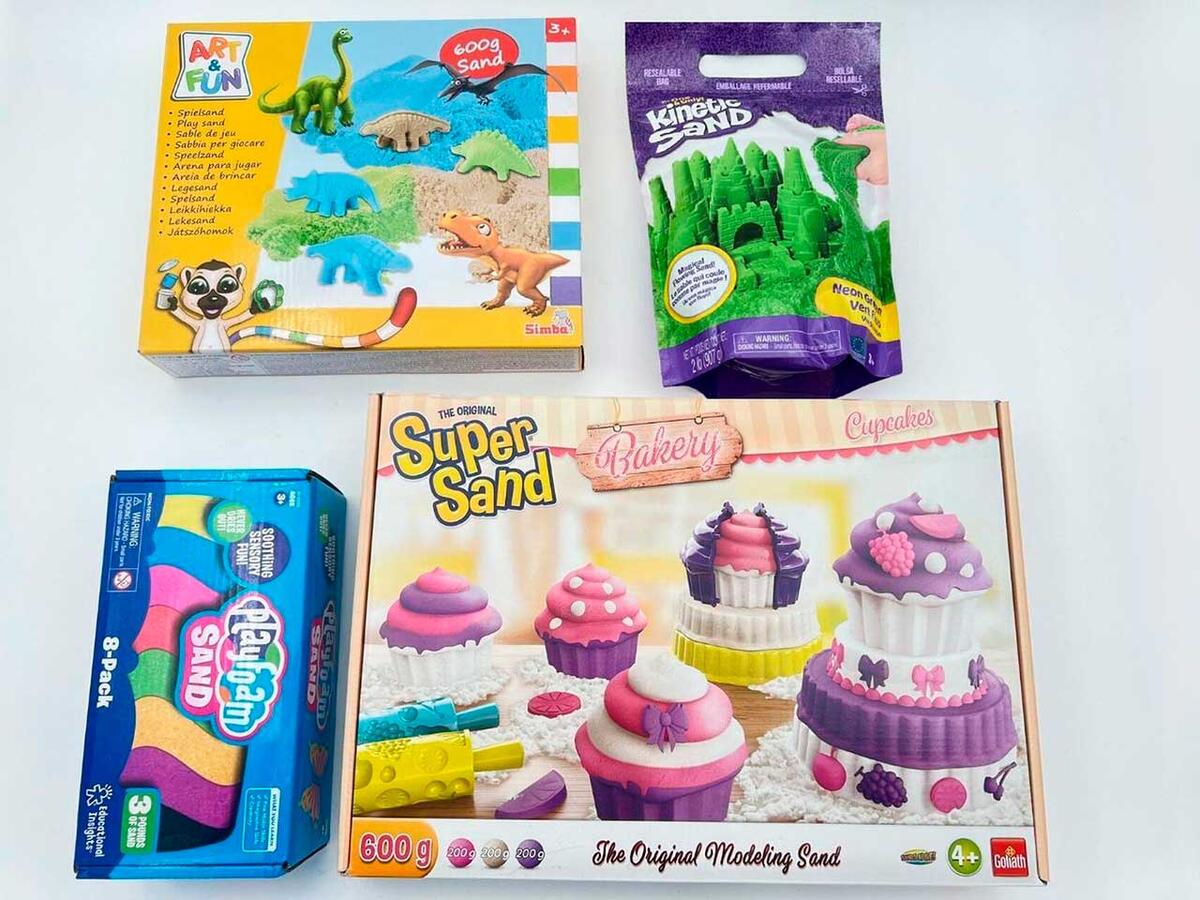
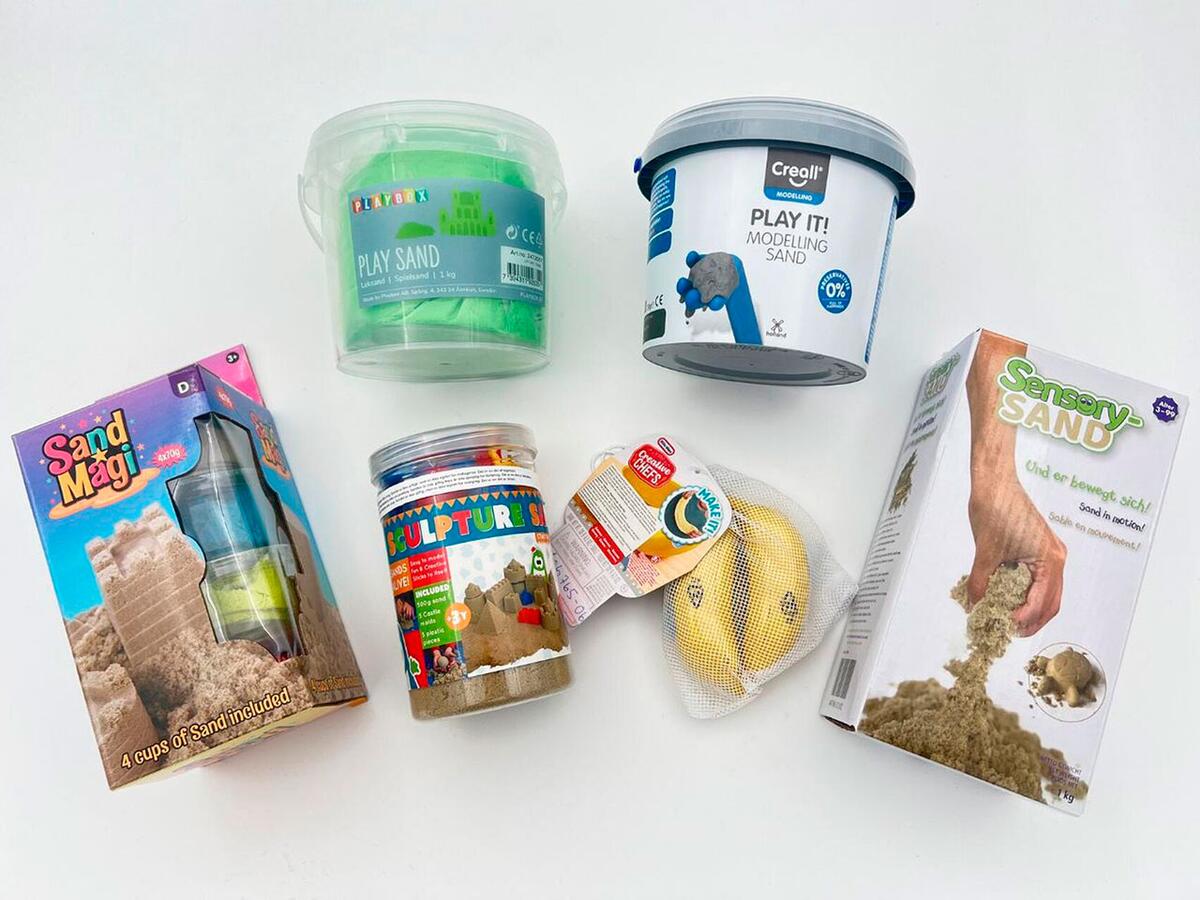
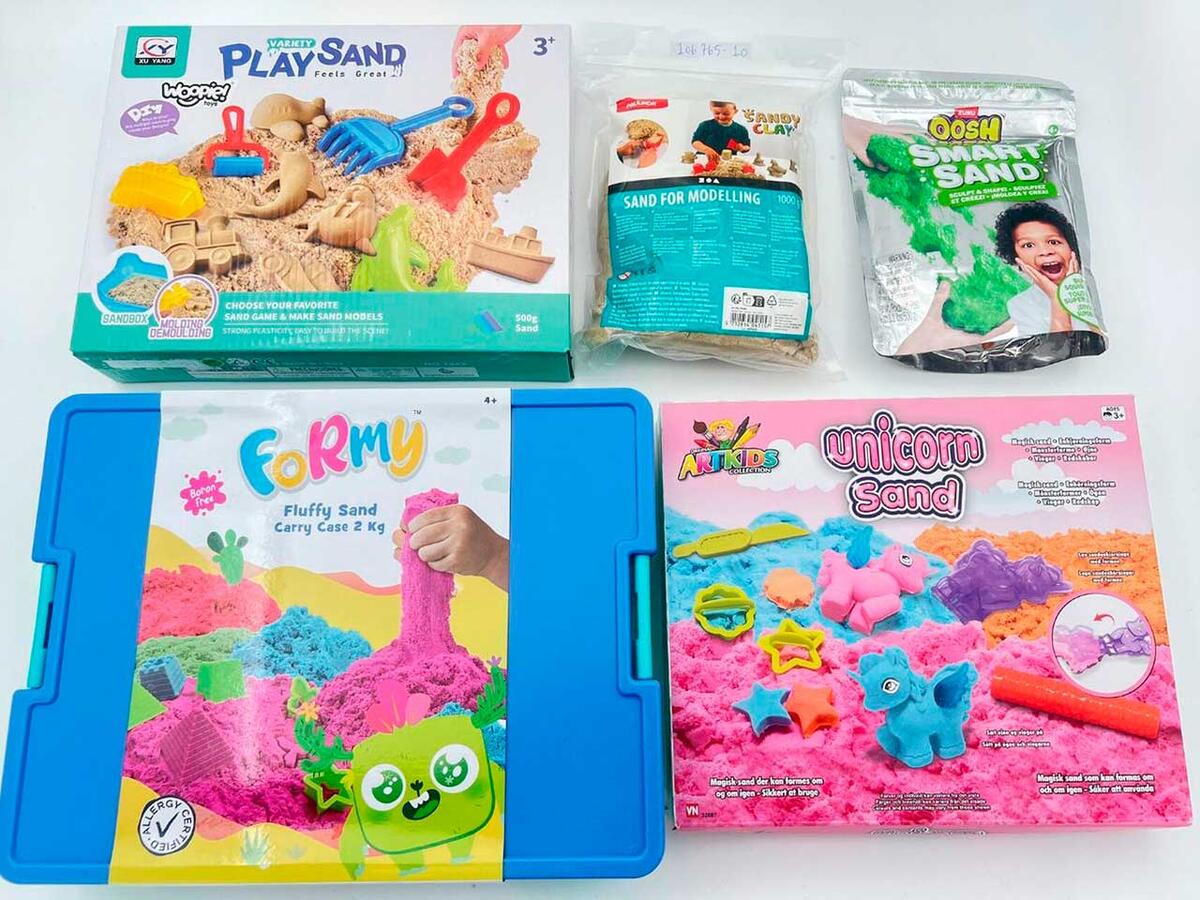
We have tested 15 magic sand products purchased on the Danish market for asbestos content, and none of them contain these harmful fibers. Here you can see the 15 play sand products we have purchased and tested in a laboratory:




A play sand product from Amazon contains asbestos
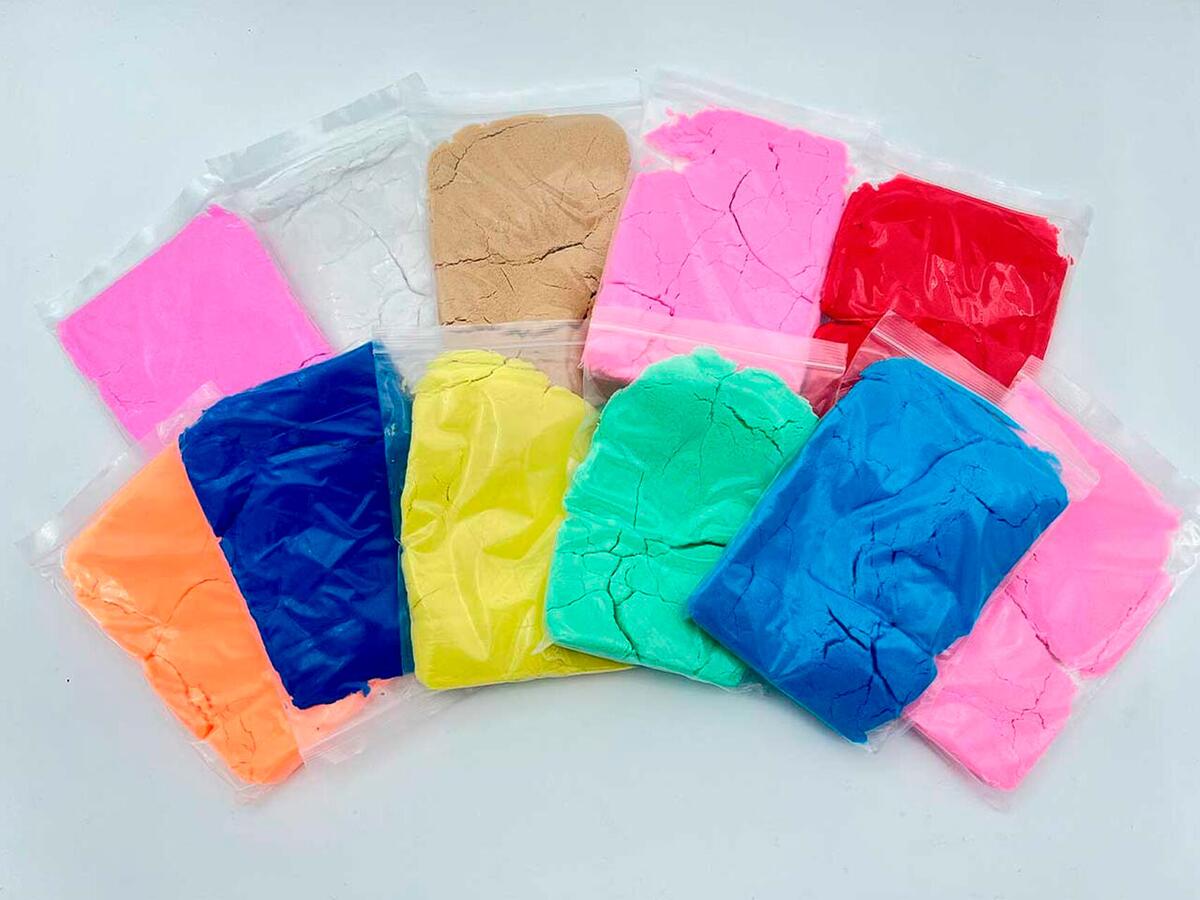
We also tested 11 magic sand products purchased from online marketplaces such as Cdon, Fruugo, Amazon, AliExpress, and eBay, where you often buy from sellers outside the EU. Here, we found asbestos in one play sand product purchased on Amazon, which was shipped directly from a seller in China.
We did not test play sand from Temu or Shein, as we did not find any magic play sand for sale on those two platforms when we purchased products for the test.

Sand art for children may contain asbestos
There is another type of play sand for children known as sand art or decorative sand. It is typically loose, colored sand in small tubes or bottles used for creating pictures. Here, the test results are more concerning. We tested four products of this type of creative play sand and found asbestos in three of them.
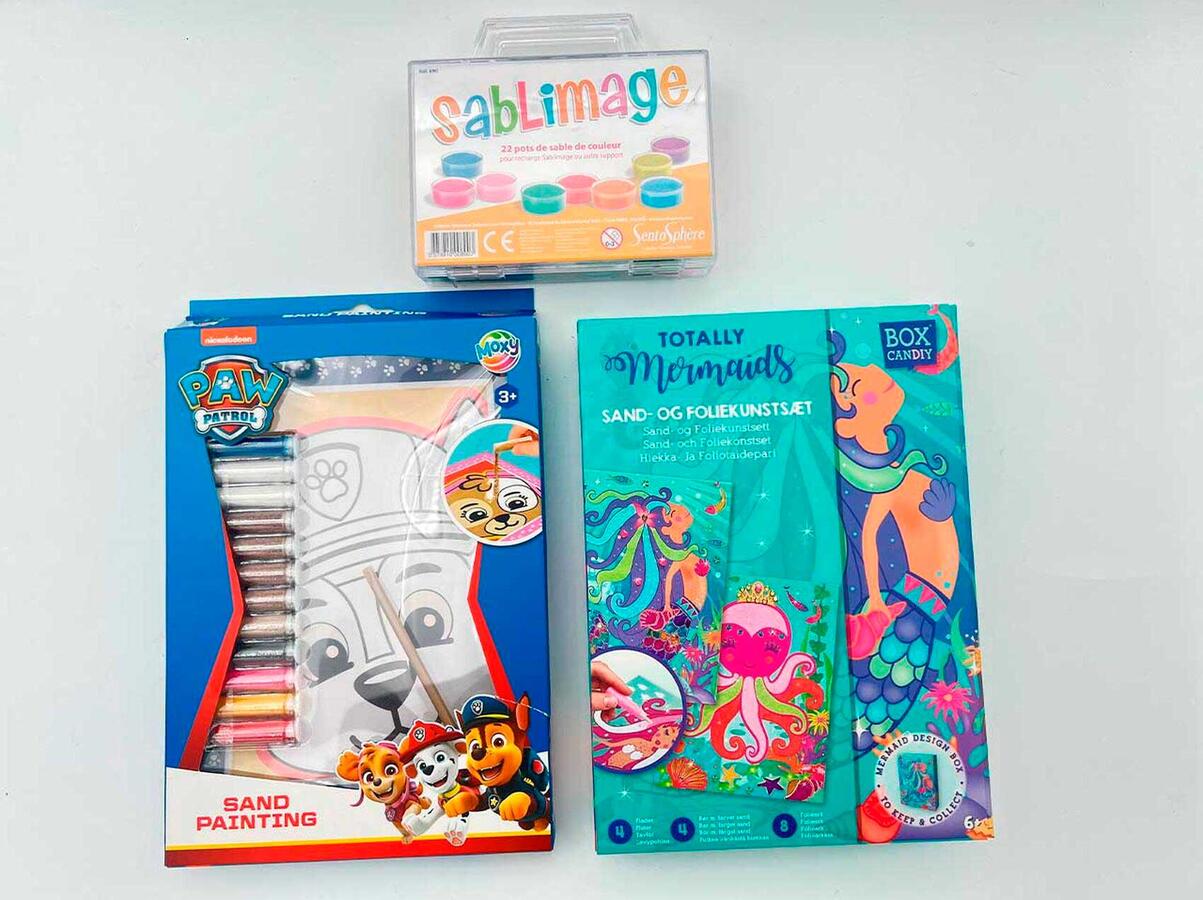

Fotokredit: and-art-asbestos
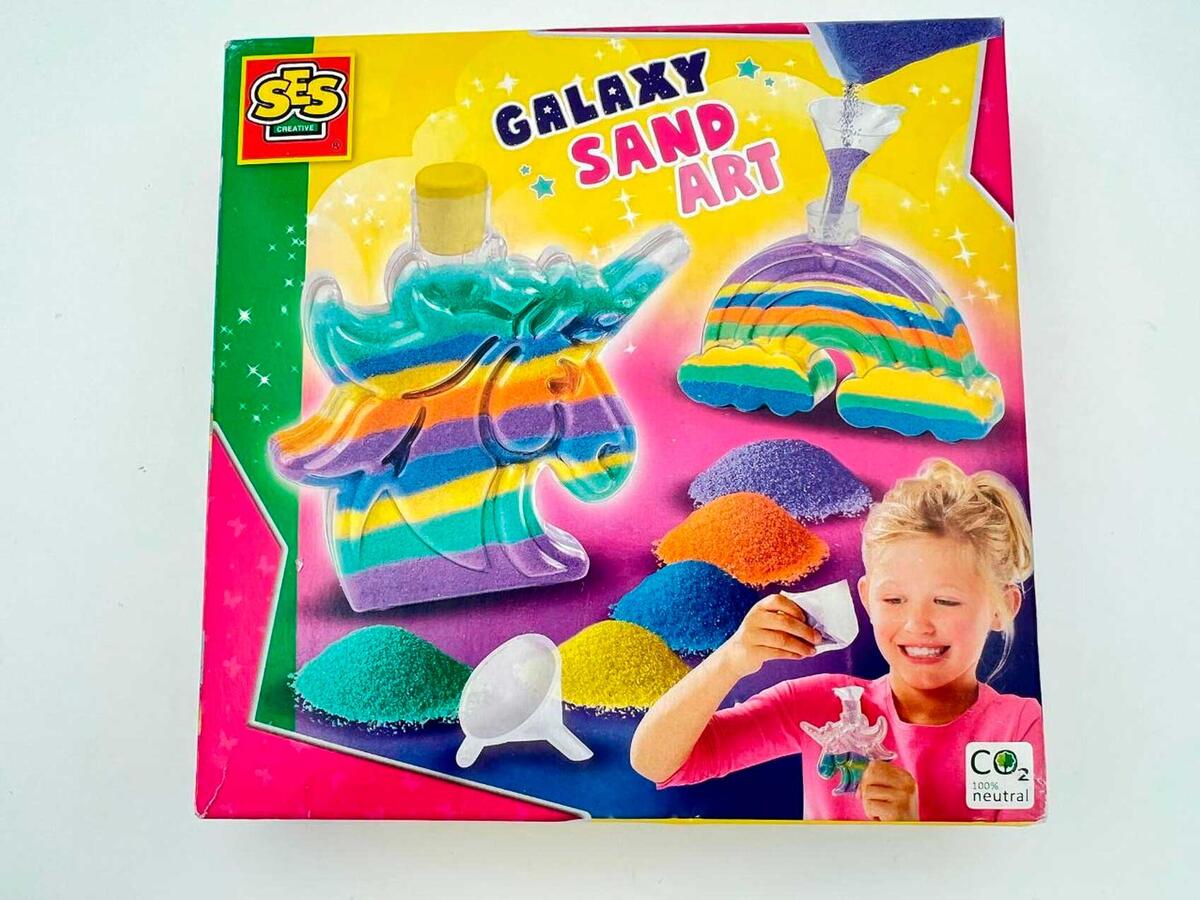

This type of play sand is loose, which means the risk of inhaling asbestos is generally higher than with, for example, magic sand, where the minerals are bound together by silicone oil.
As a precautionary measure, we recommend that children do not create pictures or artwork using decorative sand and sand art kits.
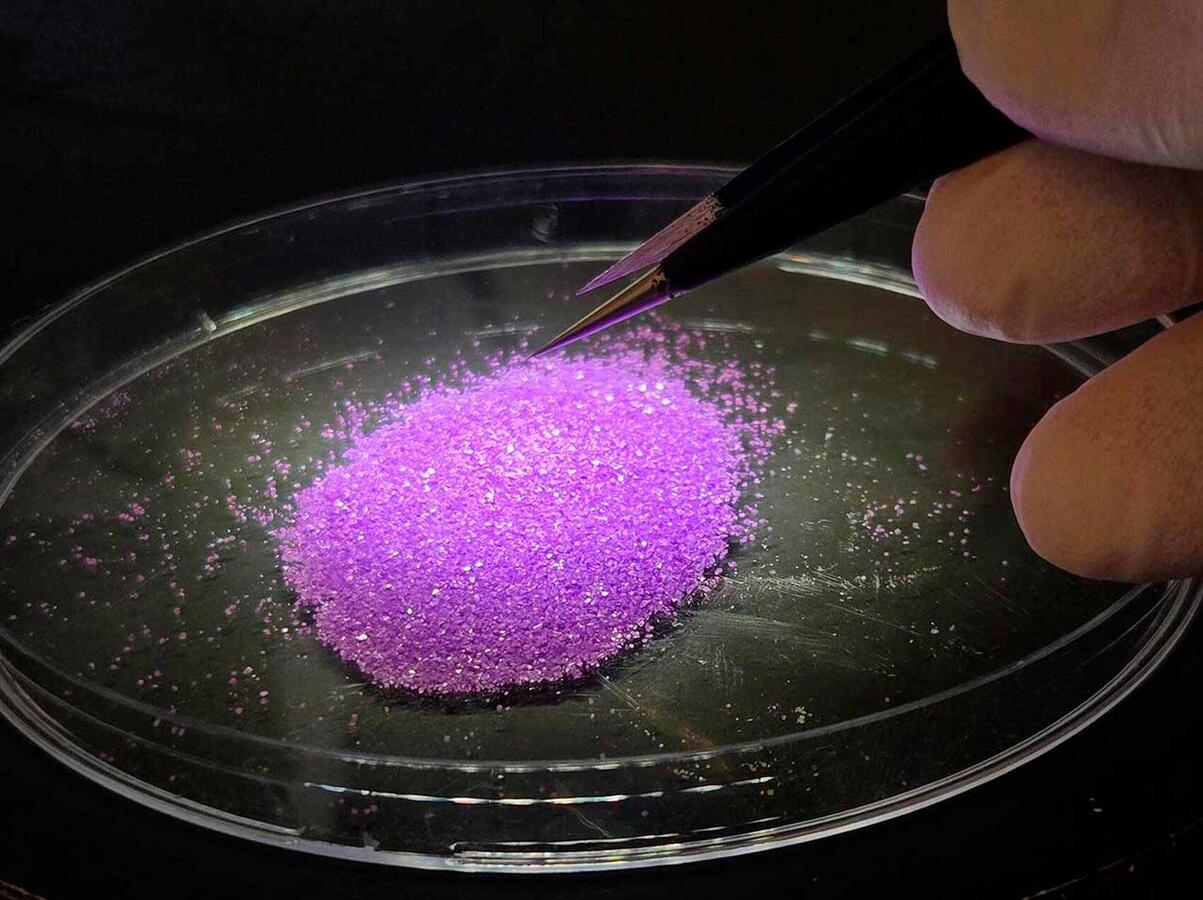
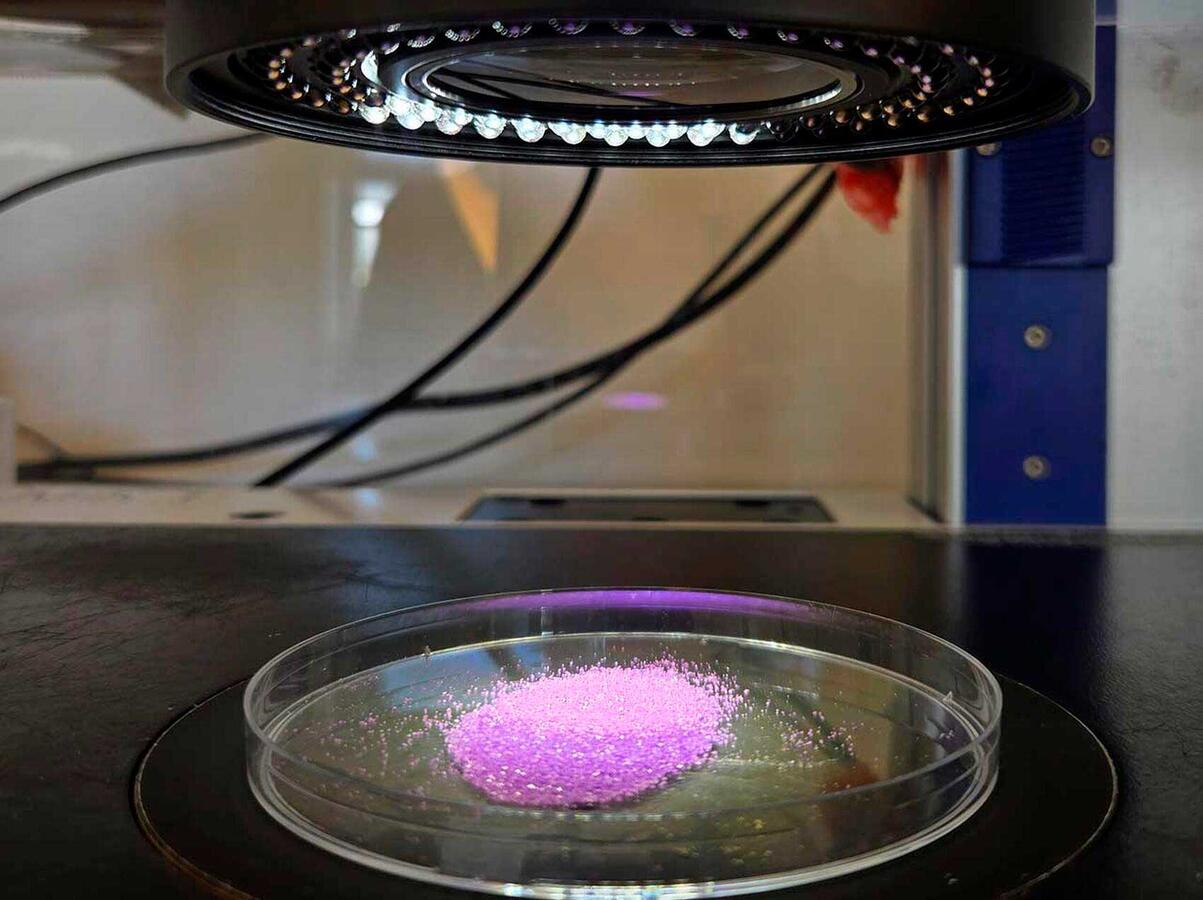
Laboratory tests have found tremolite in the sand used for sand art, and in one of the products, the asbestos type chrysotile was also detected. As with the magic sand purchased on Amazon, the concentration of asbestos is approximately 6–7 times below the limit value for toys.



Same results in the Netherlands
Dutch authorities have found similar results in a comprehensive test of 106 different types of play sand:
- Kinetic or magic sand is generally free of asbestos.
- Other types of play sand, especially sand art or decorative sand, much more frequently contain asbestos—in some cases at higher concentrations.
A magic sand art kit that we also purchased for our test was included in the Dutch study. The Dutch found higher concentrations of asbestos, exceeding the limit for toys of 0.1 percent. Therefore, we did not test this kit ourselves, which was purchased from Min Lille Mus.
Response from the companies
-
Amazon did not respond to our inquiry.
-
AvXperten states that they have removed all products from the brand in question from their webshop and are contacting the few customers who purchased the product so that they can dispose of it and receive a refund. In addition, they will contact their supplier to ensure they are informed and can take action regarding the product.
SentoSphere: The product complies with the regulations and does not pose a risk.
"All of our sand toy products were removed from shelves as a precaution back in February while we conducted a more thorough investigation of the products.
The various quantitative analyses we have carried out have all shown lower concentrations than those found in The Danish Consumer Council THINK Chemicals’ test, and in both cases, the results show that our toys comply with the regulations, which tolerate unintended traces below 0.1%. The presence of asbestos traces in our decorative sand is entirely unintentional.
Of course, we are not satisfied with the presence of traces of tremolite, and we are seeking alternative materials. However, this is not as straightforward as it may seem, and we must take the time to weigh the pros and cons of the different options, and also consider how children can develop their fine motor skills, creativity, and artistic sense if they are deprived of using sand simply because it contains very small traces of asbestos that can be found in nature. Asbestos is a natural mineral that can be found in many places around the planet. Would it be better for children to create only virtually, using screens?
Finally, it is important for us to state that there are very strict regulations for toys in Europe, and our risk assessment, based on a model developed by a Belgian health organization, clearly shows that traces of asbestos below the permitted limits do not pose a risk to children’s health."
-
Gucca states that they removed the product in question from their webshop as soon as they became aware of the test results, and that they have also informed the Danish wholesaler from whom they purchased the product about the findings. In addition, they will identify and notify all customers who purchased the product as soon as possible.
CCG, the manufacturer of the Nickelodeon sand art kit, states that they already withdrew the product from the market in February due to their knowledge of the presence of asbestos.
-
"We are surprised by this test result, and The Bubble Factory has immediately begun verifying its own test results and procedures."
Tips for play sand
- Buy magic sand from Danish retailers, and choose products that have been tested to be free of asbestos—either from our tests or from tests conducted by other authorities.
- Do not buy magic sand or other toys from online marketplaces with sellers outside the EU. In such cases, it can be difficult to know who you are buying from, and we often find unwanted chemicals in these products in our tests.
- Avoid decorative sand art kits until there is a clearer overview of asbestos in these products.
- Have you purchased play sand with asbestos from our test? As a precautionary measure, we recommend disposing of it and buying a product from the list without asbestos. You can discard it as asbestos-containing waste—ask your local recycling center about proper handling.
- If you have used play sand or decorative sand containing asbestos, you can clean the area with a damp cloth to prevent contaminated dust from becoming airborne and being inhaled. Place the cloth in a sealed bag before disposing of it.
Why can play sand contain asbestos?
The sand used for play sand may come from mines where asbestos occurs naturally.
It is not possible to predict which products contain asbestos, and the asbestos content can vary from batch to batch. Laboratory analysis is required to determine this.
Avoid products with asbestos
The amounts of asbestos found in the play sand are lower than the current limit value of 0.1 percent. Asbestos mainly poses a health risk through prolonged inhalation and at higher fiber concentrations. It is also unclear to what extent asbestos from moldable magic sand is released into the air.
However, asbestos is unwanted in toys regardless of the amount, and we therefore recommend avoiding products in which asbestos has been found and instead using play sand without asbestos.
We have also informed the Danish Environmental Protection Agency’s Chemical Inspection about the results for the tested products so they can assess the products and determine whether they pose a risk.
Several countries have investigated play sand for asbestos
In Finland, Belgium, the Netherlands, New Zealand, and Australia, asbestos residues have been found in various types of play sand. This includes colored play, hobby, and decorative sand, magic sand, kinetic sand, sand-filled stretch fidgets and squeeze figures, and sand play tables. Many of the products containing asbestos appear to be manufactured in China.