
Avoid nitrite in snack sausages
The small sausage snack in your child’s lunchbox may contain the additive nitrite, which can form carcinogenic substances. However, it is also easy to find snack sausages without this substance.

Small cured sausages are a quick and convenient snack for lunchboxes. But like other types of processed meat, they may contain the additive nitrite, which can be converted into carcinogenic nitrosamines in food.
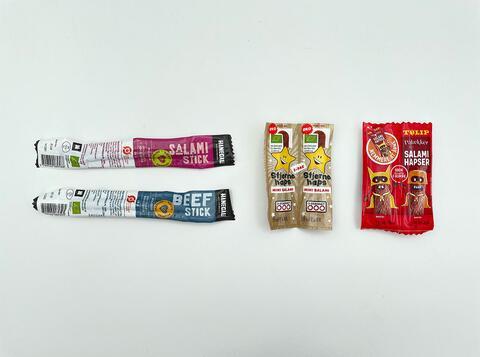
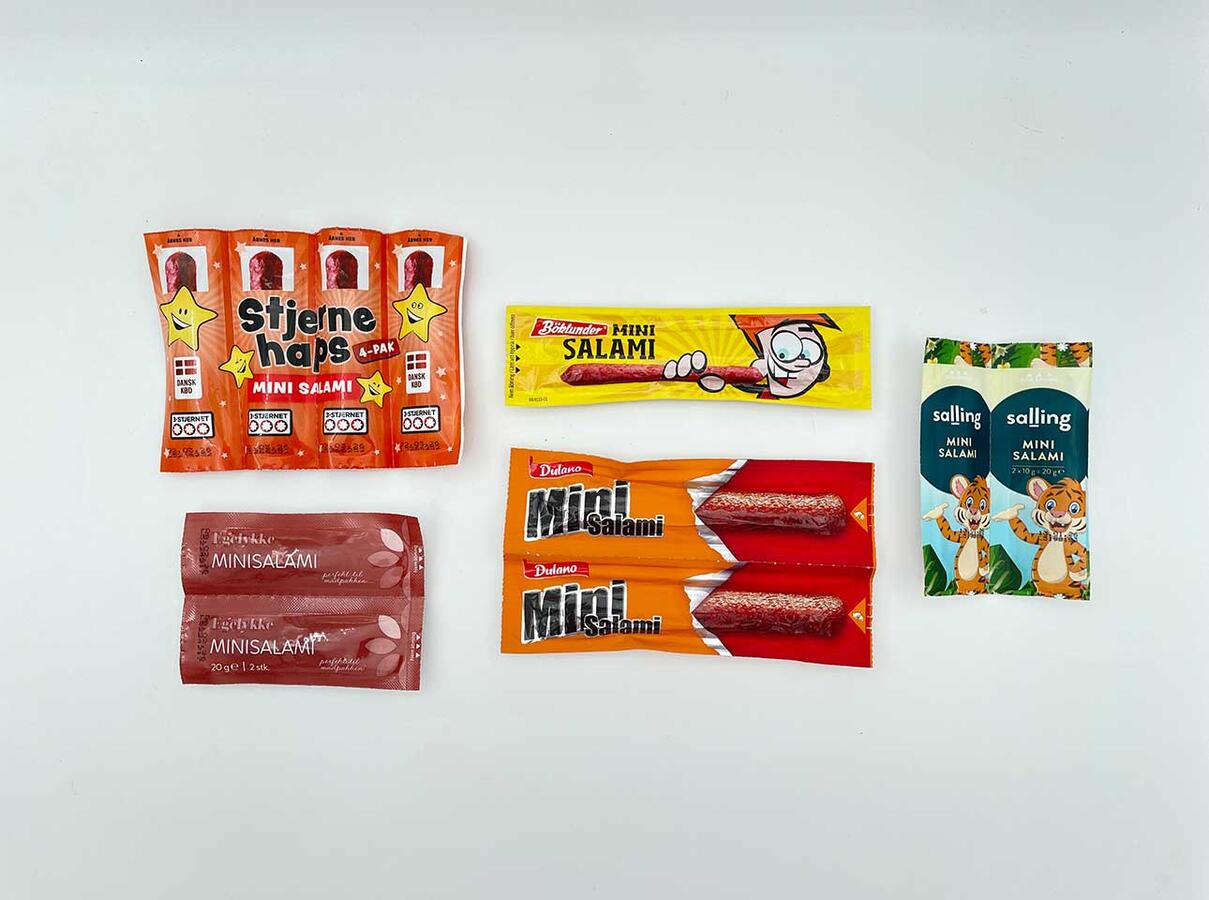
In a recent review, we identified five snack sausages containing nitrite - and four without. We focused on snack sausages that are specifically marketed to children, either through their marketing or by being individually packaged for convenience in lunchboxes.



The content is not a problem in itself
Denmark has long had lower limits for nitrite content, and the EU has recently followed suit by lowering the European limits. Therefore, the nitrite content in individual snack sausages is not in itself a cause for concern.
However, you are also exposed to nitrate - which can be converted into nitrite and nitrosamines - naturally through other foods and drinking water. In addition, you are exposed to problematic chemicals from other sources, and it is this total exposure that may be problematic.
Snack sausages are one of the sources where nitrite content can relatively easily be avoided. This is more difficult when it comes to drinking water and vegetables that naturally contain nitrate. Therefore, choosing sausages without nitrite is a good idea, especially for children.
Don’t be misled by cute marketing
Even if the packaging features playful characters and animals, the contents are not necessarily different from other sausages. There are no special requirements for sausages or processed meats marketed to children.
In most cases, snack sausages marketed to children are simply smaller than other sausages. However, this does not make them child-friendly, as even small snack sausages can contain up to half of the maximum daily salt intake recommended for a child.
The Danish Veterinary and Food Administration also recommends generally reducing your intake of processed meats such as snack sausages.
When purchasing processed meat, you can look for products with lower fat and salt content. However, none of the snack sausages reviewed met the relevant criteria.
How to avoid nitrite
Nitrite must be declared on the label and most often appears as E250, but it may also appear as E249. Check the ingredient list for these numbers.
You can also choose organic Danish products, which are not permitted to contain nitrite. Some organic meat products from other countries may be allowed to use nitrite by foreign authorities. Therefore, it is a good idea to check the ingredient list even when the snack sausage is organic.
Sausages are relatively high in salt and fat, and snack sausages should therefore not be a regular part of lunchboxes or a daily snack - even if you choose varieties without nitrite.
Serving cured sausage on bread instead can make the snack more nutritionally balanced.
Nitrate in drinking water and vegetables
Nitrate occurs naturally in vegetables and can be converted into nitrite. This is one of the reasons why authorities recommend that infants aged 4–6 months should not be given beetroot, spinach, fennel, celery, or arugula.
Nitrate is also present in drinking water, partly as a result of agricultural fertilization. However, as with nitrite used as an additive, authorities are working to lower the permitted limits for nitrate in drinking water.
Studies suggest that there may be a link between nitrate in drinking water and disease, particularly colorectal cancer.
What the manufacturer says
-
At Atria Denmark, we produce several varieties of mini salami, both with and without nitrite, in order to give our consumers the opportunity to choose according to their preferences.
In general, we can say that the mini salamis we produce comply with Danish limits for added nitrite, which are lower than those applied in the rest of the EU.
It is correct that our organic mini salami contains beetroot powder. The beetroot powder is used to provide both flavor and color to the product. The beetroot powder we use is made from ordinary beetroots that have been dried and powdered. It does not contain high levels of nitrate and therefore does not constitute a source of nitrate/nitrite.